
Coins and Australia is 4,600 coins, 960 banknotes, 781 tokens, 2,805 errors and varieties, 214 articles and much more!
News and updates
July 3, 2025

30 Years of the Torres Strait Islander Flag
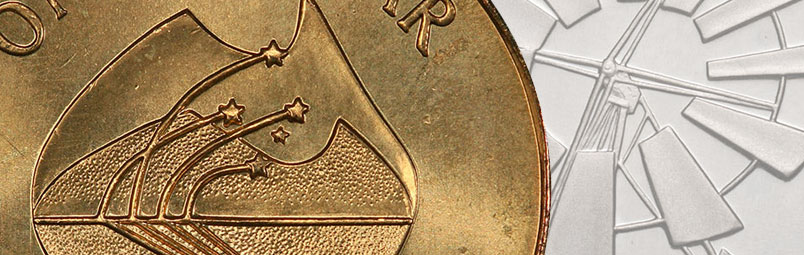
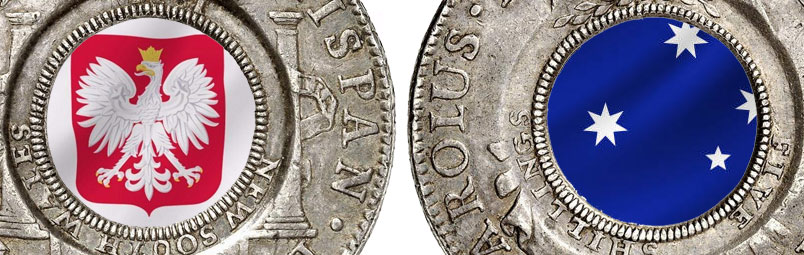
Designed by Royal Australian Mint coin designer Elyssa Waterford, the reverse shows the Torres Strait Islander flag displayed alongside the Australian flag to acknowledge the history and diverse cultures of Australia’s First Nation’s peoples.
June 30, 2025

Penny 1953 to 1964 - Price Guide and values
The Penny reverse design changed in 1938 and remained the same until the decimal currency adoption. The obverse now shows Queen Elizabeth II. In 1954, no penny was produced.
June 28, 2025

Ten dollar 1982 to 2025 - Specifications and melt values added
Uncirculated and proof decimal coins with denominations other than what is seen on circulating coins are produced most years by the Royal Australian Mint. Commemorative individual issues and sets with special designs are released in various alloy for collectors.
June 27, 2025

Penny 1937 to 1952 - Price Guide and values
Most of the reverses on Australian coins changed in 1938, except for the Half Penny and the sixpence. The Penny design changed for the roo reverse. Our old standby, India, came to the rescue with the Bombay branch of the Royal Mint striking both pennies and halpennies during 1942 and 1943.
June 25, 2025

10 pounds 1940 to 1966 banknotes - Price guide and values
It was four years after the death of King George V before the design on the front of the five pound note was modified. George VI's portrait replaced that of the George V and the watermark was changed to Captain James Cook. The death of King George VI belatedly led to the introduction of new designs for the ten pound note. Commander of the First Fleet and first Governor of New South Wales, Captain Arthur Phillip, features on the front of the new note and a theme of Industry and Science appears on the back, together with a woman modelled by Karina Nartiss.